Synthetic Motor Oil Supply Chain Crisis: What the Hormuz Disruption Means for Drivers, Shops, and Fleets
Editor’s note: This article reflects market reporting available as of November 1, 2026. The Strait of Hormuz is no longer accurately described as continuously closed: shipping flows have partly recovered, but elevated security and shipping risks remain. Shell has also partially restarted its Pearl GTL plant, while full recovery of the damaged processing train is still pending.
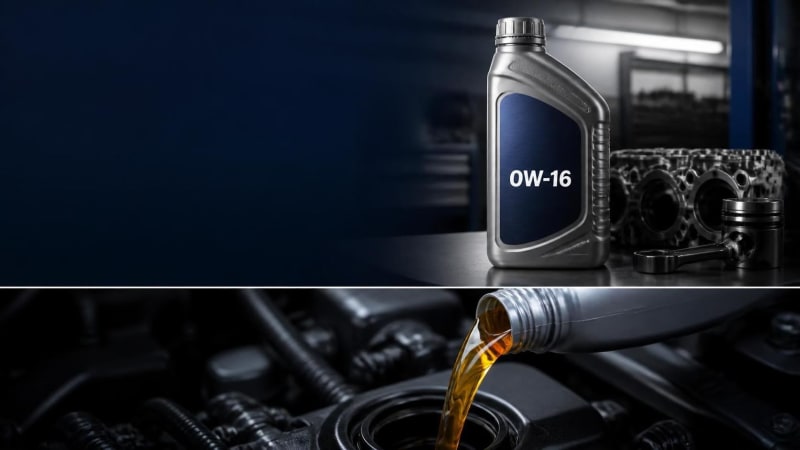
A bottle of synthetic motor oil is the end product of a surprisingly international supply chain. It depends on base oils, chemical additives, blending, testing, packaging, and transport—all of which can be affected when a major shipping route or production site is disrupted.
That is why the Middle East conflict and disruption around the Strait of Hormuz have mattered well beyond crude oil markets. The impacts have reached the lubricant industry, where Group III base oils are important ingredients in many synthetic formulations. Damage to production facilities, interrupted exports, shifts in available supply, and uncertainty about shipping have put pressure on manufacturers, distributors, repair shops, and fleet buyers.
For customers, the practical question is not simply whether “all motor oil” is running out. It is how changing supply conditions affect the types, quantities, prices, and delivery timing of particular products—and how to source suitable products without compromising the requirements of a vehicle or equipment maker.
Sauto Mobils is an online automotive-products retailer, not a base-oil producer or lubricant blender. Its role in this environment is more practical: it offers a product catalog, product and category pages, bulk-pricing information, ordering guidance, and shipping and returns support. Those tools can help customers organize purchases and compare available products, but they should not be mistaken for a guarantee against industry-wide shortages or a promise that every item is in stock.
Why Group III base oil matters to synthetic motor oil
Motor oil is made from base oils combined with additive packages. The base oil provides the fluid foundation; additives help give the finished lubricant important characteristics such as detergency, oxidation resistance, wear protection, and performance under particular operating conditions.
Group III base oils are highly refined petroleum-derived stocks commonly used in synthetic and synthetic-blend lubricants. They are important to many modern formulations, including low-viscosity products. Group III is not the only base-oil option, and not every synthetic product uses an identical formulation—but when supply of a particular base-oil group tightens, manufacturers may have to compete for alternate sources or evaluate new formulations.
Industry reporting in 2026 described the Middle East as a major source of Group III base oils for international markets. One report estimated that Middle Eastern sources represented around 44% of U.S. Group III supply, while reporting on January 2026 import flows cited an even larger share of U.S. Group III inflows for that month. These figures refer to different measures and time periods, but both underscore the market’s exposure to disruptions in the region.
The Strait of Hormuz: a shipping risk with consequences beyond crude
The Strait of Hormuz is a critical maritime passage connecting the Persian Gulf with the Gulf of Oman and the Arabian Sea. It matters to lubricant supply because shipments of base oils and related products from Gulf producers normally depend on safe, reliable shipping routes.
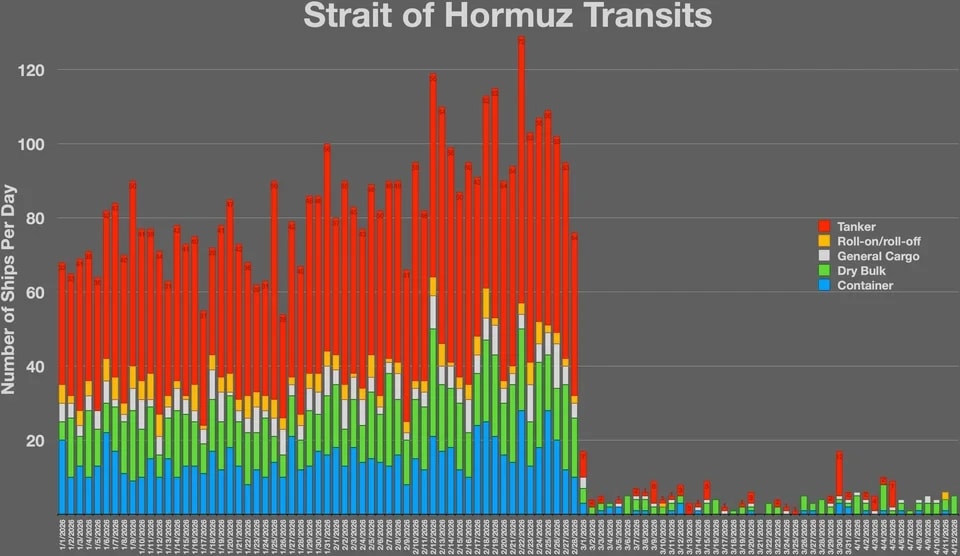
In 2026, conflict-related risks sharply disrupted traffic through the strait. That created a two-part problem for lubricant supply chains: cargoes could be delayed or interrupted, and production facilities themselves faced damage and uncertainty. Reopening a shipping route can ease transportation constraints, but it does not instantly restore refinery capacity, replenish depleted inventories, or return cargo schedules to normal.
Recent reporting says exports have partially recovered from the most acute disruption, while shipping costs and security concerns have remained elevated. The market is therefore better described as recovering unevenly than as facing a permanently closed strait.
For lubricant buyers, this distinction matters. A resumed route can improve the movement of products, but a delayed shipment may still take time to work through storage, blending, testing, packaging, and distribution. A supply-chain bottleneck can persist even after the headline event changes.
Pearl GTL: serious damage, followed by a partial restart
Shell’s Pearl gas-to-liquids facility in Qatar is an important producer of GTL products, including base oils. The facility was shut down after damage in March 2026. Reporting at the time said that the disruption removed a significant source of GTL base oils from the market and that finding immediate replacement volumes would be difficult.
The latest available reporting describes a partial restart, not a full return to normal. Shell’s restart is expected to allow limited inventory building, while repairs to one of the plant’s two processing trains are reported to remain underway. A partial restart is positive news, but it does not by itself confirm that base-oil output or exports have returned to pre-disruption levels.
That difference is important for buyers: restored production capacity, available export cargoes, and dependable deliveries are separate milestones. Until those steps align, lubricant manufacturers may continue to manage limited supplies, prioritize committed orders, or review formulations and sourcing options.
Why a shortage does not mean every motor oil will disappear
The phrase “synthetic oil shortage” can make it sound as if every grade and brand is affected in the same way. In reality, supply pressure can vary by base-oil group, viscosity grade, formulation, package size, brand, region, and distributor inventory.
Some manufacturers may have more access to alternate feedstocks or inventories than others. Some products may be easier to reformulate than others, while highly specified formulations can require extensive technical evaluation. Industry reporting has described companies considering alternative base-oil combinations and conducting validation testing to ensure products continue to meet their performance requirements. hotrod.com
That does not mean customers should choose a substitute based only on a similar viscosity number or a “synthetic” label. A replacement oil should meet the vehicle manufacturer’s required viscosity and performance specifications. Check the owner’s manual and product label, and consult a qualified service professional if the correct specification is unclear.
The additive bottleneck: what is known and what still needs caution
Base oil is only one part of a finished lubricant. Additives such as detergents, antioxidants, and anti-wear agents contribute to the finished product’s performance. ZDDP, for example, is a family of compounds used in lubricants for anti-wear protection and other functions. Its use and concentration must be balanced with the needs of the engine and the lubricant specification.
The wider supply chain can be affected when any key ingredient becomes difficult to source. However, the claim that there is a verified, industry-wide additive shortage with lead times universally stretching for months is not established by the sources reviewed for this article. Additive availability and lead times can differ by chemical, supplier, formulation, and region. It is more accurate to say that additive sourcing is another potential pressure point that manufacturers and buyers should monitor—not to treat every reported bottleneck as proof of a universal shortage.
This is also why lubricant reformulation is not simply a matter of substituting one ingredient for another. Formulators have to consider how base oils and additives work together and confirm that finished products meet required performance standards.
What the supply crisis can mean for the automotive industry
Price and availability volatility
When major suppliers are disrupted, buyers may face changing prices, limited spot availability, or changing delivery windows. Even after shipping improves, manufacturers and distributors may need time to replenish inventory and resume regular supply patterns. Industry reports have described sharp pressure on Group III availability and prices during the 2026 disruption.
More planning for repair shops and fleets
Shops and fleets that rely on steady consumption of engine oil may need to watch stock levels more closely. The goal is sensible purchasing—not panic buying. Useful practices include tracking monthly usage, identifying approved products for each vehicle, and checking replenishment lead times before stock gets critically low.
Formulation changes require care
A manufacturer may investigate alternative base-oil combinations when a key feedstock is limited. Any change must be evaluated for the product’s intended use and performance requirements. A buyer should not assume that two oils are interchangeable just because they share a viscosity grade or broadly similar marketing language.
Inventory becomes a business decision
For a service center or fleet, having common approved items available can help avoid interruptions. But building inventory also ties up cash and requires safe, suitable storage. Bulk purchasing can be helpful when it aligns with expected use, confirmed product suitability, and available storage capacity.
How Sauto Mobils can support more organized purchasing
Sauto Mobils cannot reopen shipping routes, restart damaged facilities, manufacture Group III base oil, or guarantee industry-wide product availability. Its potential value to buyers is at the purchasing and fulfillment level: helping customers browse products, review product details, plan larger orders, and access information about payment, delivery, and returns.
Browse products and product categories
Sauto Mobils organizes its selection through a Products page and category pages. Buyers can explore motor oil, as well as transmission fluid, brake fluid, and antifreeze.
The site also provides an engines category. As with any automotive-products catalog, customers should check each listing’s details and confirm fitment or fluid requirements before ordering. A category page is a useful starting point, but it does not replace vehicle-specific requirements.
Use bulk pricing to plan orders
Sauto Mobils offers a Bulk Pricing page and product listings with quantity-based pricing information. Some listings also indicate minimum cart requirements for low-priced items, so buyers should check the current terms on the product page and at checkout rather than assume all items share the same threshold.
For a repair shop or fleet, a thoughtful bulk order can help consolidate purchasing and make stock planning easier. Before ordering, compare the product specifications, packaging size, current price, quantity tiers, and estimated consumption. Bulk ordering makes the most sense when the product is appropriate and the business can use and store it responsibly.
Review payment and ordering details
The site provides Payment & Ordering Information to help customers understand the ordering process. Reviewing that page before placing a larger order can help purchasing teams prepare and keep their order details organized.
Check shipping and delivery information
Sauto Mobils has a dedicated Shipping & Delivery page. The site advertises free U.S. shipping above a stated order threshold, but shipping terms, eligibility, and delivery estimates should be checked against the current page and the specific checkout details. sautomobils.com
For a shop or warehouse, it can also help to plan receiving in advance: track the shipment, make sure someone can accept it, and compare the delivered items with the order confirmation.
Understand returns and warranty terms
Customers can review the Returns & Warranty page before purchasing. Sauto Mobils’ site describes a 30-day money-back guarantee for unused parts; buyers should consult the published policy for current conditions and follow its instructions for any return or warranty request. sautomobils.com
Customer testimonials about bulk orders and service
Sauto Mobils publishes testimonials on its site from customers who describe using the retailer for maintenance, shop purchasing, and fleet operations. For example, one testimonial attributed to a fleet supervisor says:
“Managing a fleet is easier with Sauto Mobils. Bulk discounts are a plus! Their minimum order requirements actually help us maintain better inventory control, and the bulk pricing tiers make it easy to optimize our purchasing.”
Another customer, identified on the site as a delivery fleet manager, says:
“Bulk orders are easy and always on time. Sauto Mobils is my go-to.”
These are testimonials published by Sauto Mobils; readers should view them as customer experiences, not a guarantee of future availability or delivery timing. sautomobils.com
A practical checklist for buyers during supply uncertainty
Confirm the required product. Check the owner’s manual or equipment documentation for viscosity and performance specifications.
Review current listings. Availability and pricing can change; check the product page before building a larger order.
Compare the specific details. Verify brand, specification, package size, and quantity tiers.
Plan around actual consumption. Use past sales or maintenance records to estimate what your shop or fleet will need.
Check all order terms. Review bulk minimums, payment details, shipping information, and return requirements.
Avoid unapproved substitutions. Similar viscosity grades do not automatically mean equivalent performance or suitability.
Staying informed without overreacting
The 2026 lubricant supply crisis illustrates how geopolitical events can reach the workshop shelf through a chain of production, shipping, formulation, and distribution decisions. The Strait of Hormuz disruption and the Pearl GTL outage put pressure on a market that depends on specialized Group III base oils. Shipping and production have since shown signs of recovery, but a partial restart or resumed transit does not instantly restore predictable supply.
For drivers, the best approach is to use the lubricant specified for the vehicle and buy from current, verifiable product listings. For repair shops and fleets, careful stock tracking and well-planned purchasing can help manage uncertainty. Sauto Mobils’ catalog, bulk-pricing information, and customer-service pages provide tools for organizing orders—but buyers should always confirm the current product, price, and delivery terms.
Explore Sauto Mobils products, browse motor oils, and review the site’s bulk pricing, payment and ordering, shipping and delivery, and returns and warranty information before placing an order.